Choosing Between a Catamaran and Monohull
The Core Dilemma
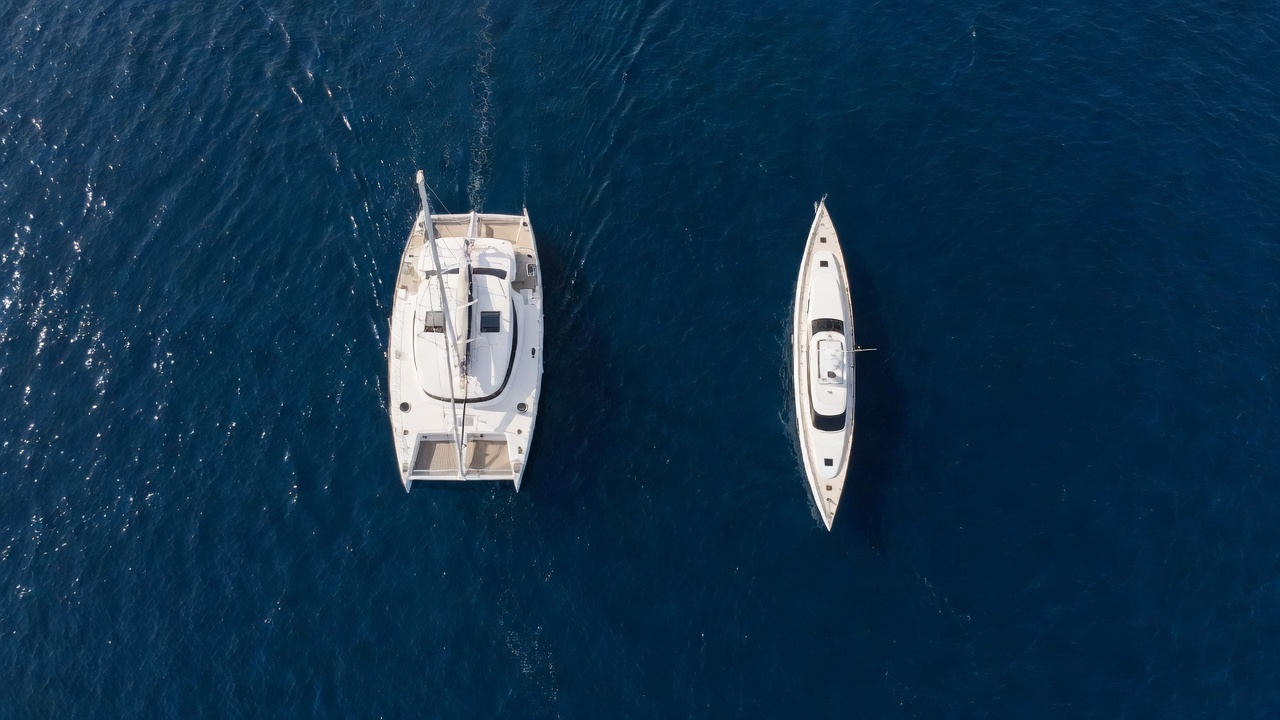
When searching for a last-minute charter, your options will naturally be limited to what is currently available. However, understanding the fundamental differences between a catamaran (two hulls) and a monohull (one hull) is crucial for setting expectations. The type of vessel you choose dictates not only how you sail, but how you live aboard, where you can anchor, and how your budget is allocated.
The Catamaran Advantage
Over the past decade, catamarans have surged in popularity in the charter market, particularly in tropical destinations. Their design offers several distinct advantages for vacationers.
- Unmatched Space: A 50-foot catamaran offers roughly the same living space as a 70-foot monohull. The salon bridges the two hulls, creating a massive, open-plan living area that flows seamlessly into the aft cockpit.
- Stability: Catamarans do not heel (lean over) underway. For guests prone to seasickness or those who simply prefer to keep their cocktail upright on the table while sailing, this is a massive benefit.
- Shallow Draft: Without a deep, heavy keel, catamarans can access shallow anchorages and drop anchor closer to the beach. This is particularly useful in places like the Bahamas.
Last-Minute Reality: Because they are in such high demand, finding a high-quality crewed catamaran on short notice during peak season can be challenging. You must move quickly if one becomes available.
The Monohull Experience
The monohull represents the classic, romantic vision of sailing. Sleek, responsive, and traditional, they appeal to purists and those seeking a dynamic connection with the sea.
- Sailing Performance: Monohulls generally point closer to the wind and offer a more tactile, engaging sailing experience. If your group is eager to trim sails and feel the boat cut through the waves, a monohull is the answer.
- Marina Accessibility: The wide beam (width) of a catamaran means they often take up two slips in a marina, doubling the docking fees (if they can fit at all). Monohulls fit into standard slips easily, making them much more convenient for Mediterranean itineraries where marina hopping is common.
- Aesthetic Appeal: There is an undeniable elegance to a monohull under full sail that wide, boxy catamarans often struggle to match.
Last-Minute Reality: As the broader market trends toward catamarans, exceptional monohulls sometimes have more scattered availability. You might find a stunning classic sailing yacht available last-minute precisely because the mass market is clamoring for multihulls.
Budget and Berthing Implications
It is important to consider that length does not equate to price evenly across these two categories. A catamaran will generally cost more to charter than a monohull of the same length due to the increased volume and complex build. Furthermore, as mentioned, marina fees for catamarans can be substantially higher. If your last-minute itinerary requires frequent marina stops, a monohull might be the more economically sensible choice.
Making the Decision
If your group values space, stability, lounging areas, and shallow water access, hold out for a catamaran. It is ideal for families with young children or groups who view the yacht primarily as a floating luxury villa.
If your group values the thrill of sailing, plans to visit tight historical ports, or wants to experience traditional maritime romance, a monohull is the perfect fit. Being flexible on the hull type is the single best way to ensure you secure a fantastic vessel when booking at the eleventh hour.